Start with the occasion, quantity, size, delivery date and intended finish. Agree on the design, personalization and approval stages before production. A useful trophy brief covers the object, its base and the way it will be presented and transported.
Start with the moment the trophy needs to mark
A championship trophy, an employee recognition award and a commemorative gift have different jobs. A stage trophy needs a recognizable silhouette from a distance. A desk award is handled at close range, where lettering, edge quality and the underside of the base matter. Decide how the recipient will see, hold and display it before choosing a manufacturing process.
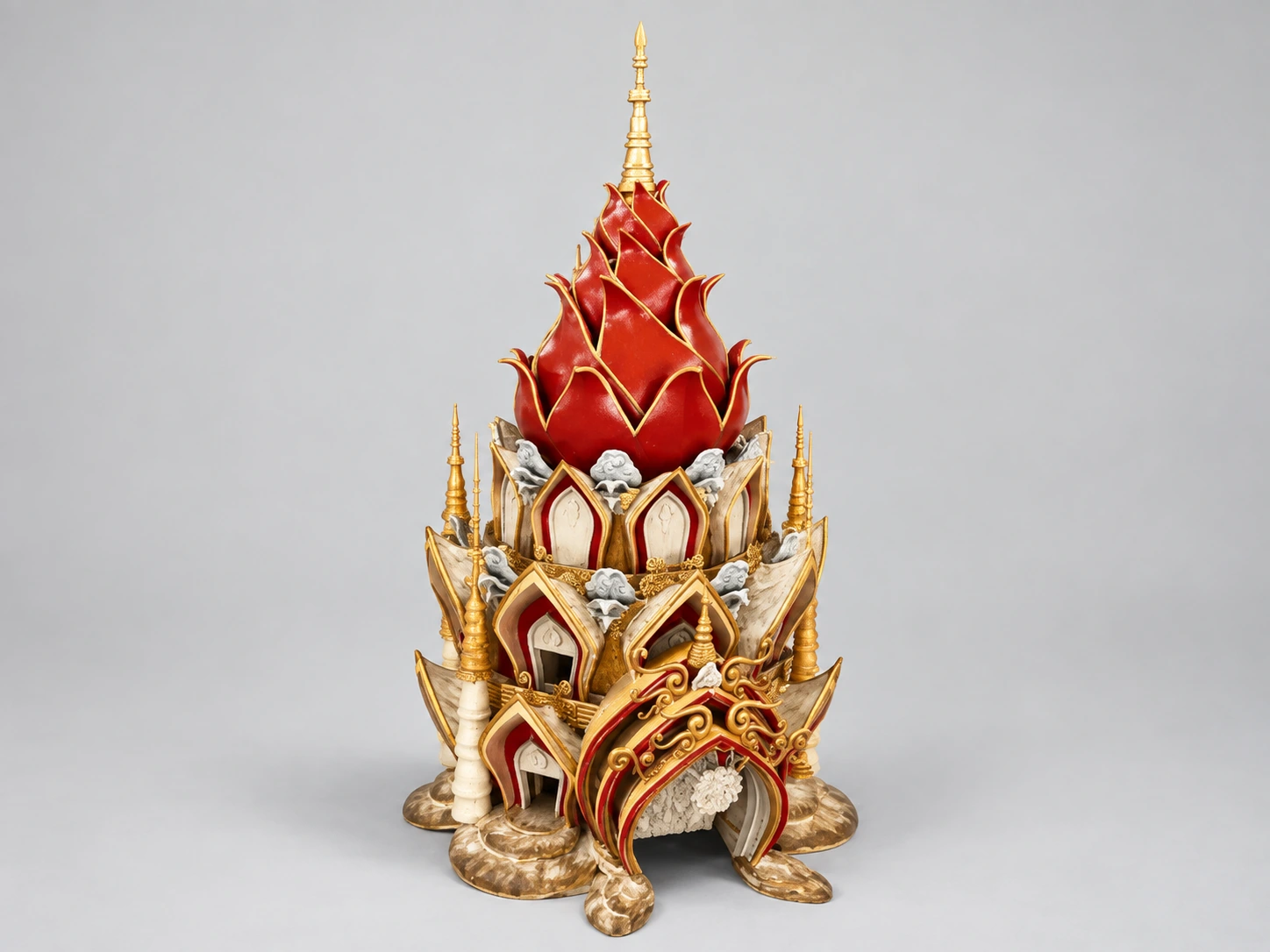
Collect two or three references and explain what you like about each: the shape, a surface effect, a proportion or the presentation. This is more useful than asking to reproduce an entire object. Include the event identity and artwork you are entitled to use, along with any details that must remain unchanged.
- Occasion, audience and intended display location
- Quantity, approximate height and a working budget
- Required delivery date and destination
- Logo, inscription and variable recipient names
- Reference images and preferred surface finish
Treat the trophy and its base as one design
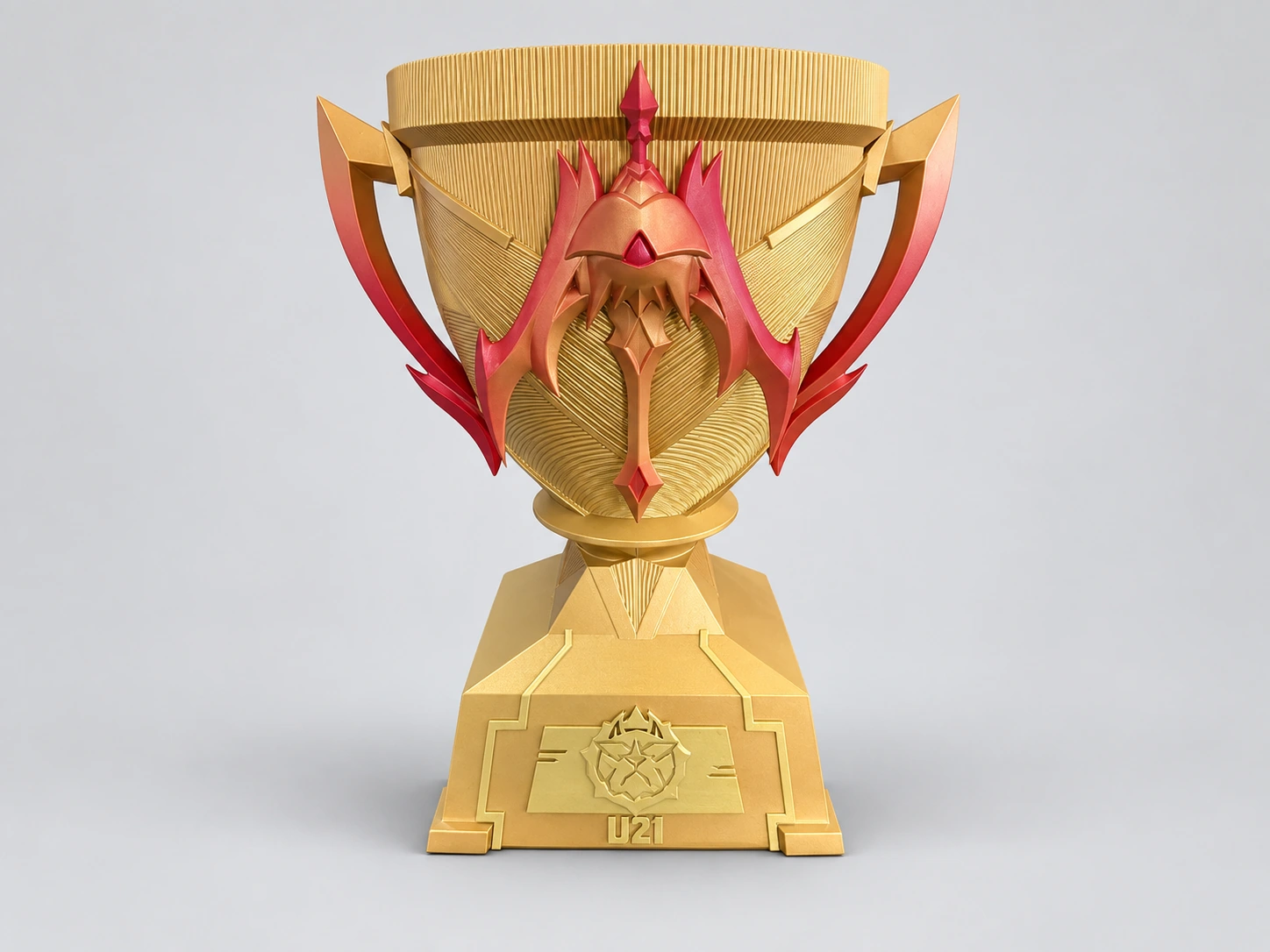
The base is part of the composition. It sets the scale of the sculpture, provides space for an inscription and affects how the award rests on a table. Discuss stability and handling early, especially when the top is wide or the central form is narrow. A dramatic render alone does not resolve those practical details.
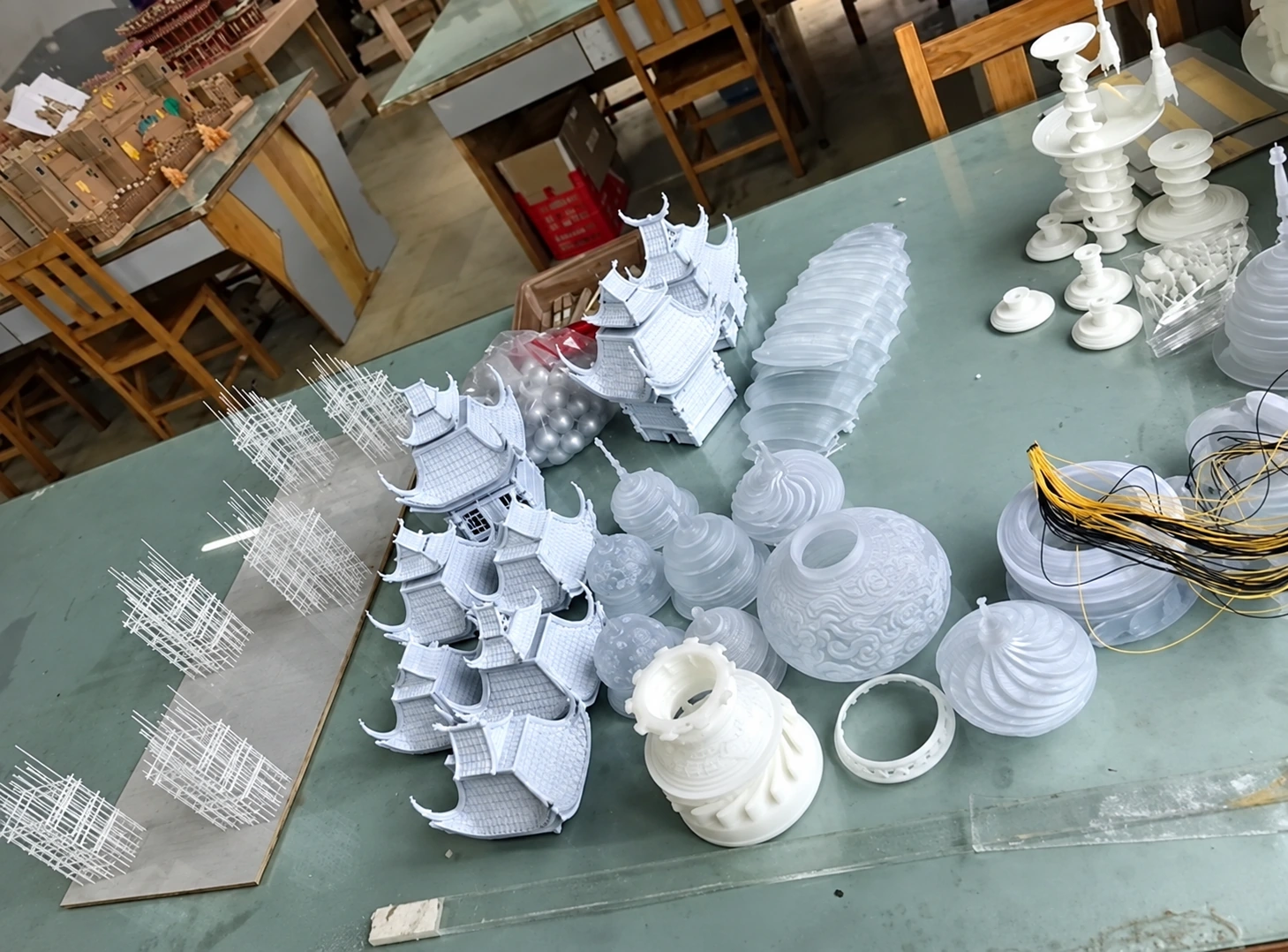
For a trophy with several colors or metallic-look areas, the design also needs a plan for part separation and assembly. Separating a crest, lettering and base can make finishing more accessible. The meeting lines should sit where they support the design instead of interrupting a focal surface. Nexbie can develop the concept and 3D model as part of the agreed project scope.
Make each approval answer a specific question
A digital proof can establish the overall shape, dimensions and spelling. It cannot fully communicate weight, texture or the way a reflective surface changes under real light. If those qualities are important, include a finish sample or a physical prototype in the quotation and schedule.
Use a written approval record with a version number. For a series of named awards, check the complete recipient list as well as the sample inscription. Agree what changes are included before approval and how later revisions will affect cost and timing.
| Approval | What to check |
|---|---|
| Design proof | Silhouette, dimensions, logo placement and assembly |
| Inscription proof | Names, spelling, dates and reading direction |
| Finish sample | Color, sheen, texture and agreed reference lighting |
| Production release | Quantity, approved version, packaging and delivery scope |
Plan the presentation and the journey together
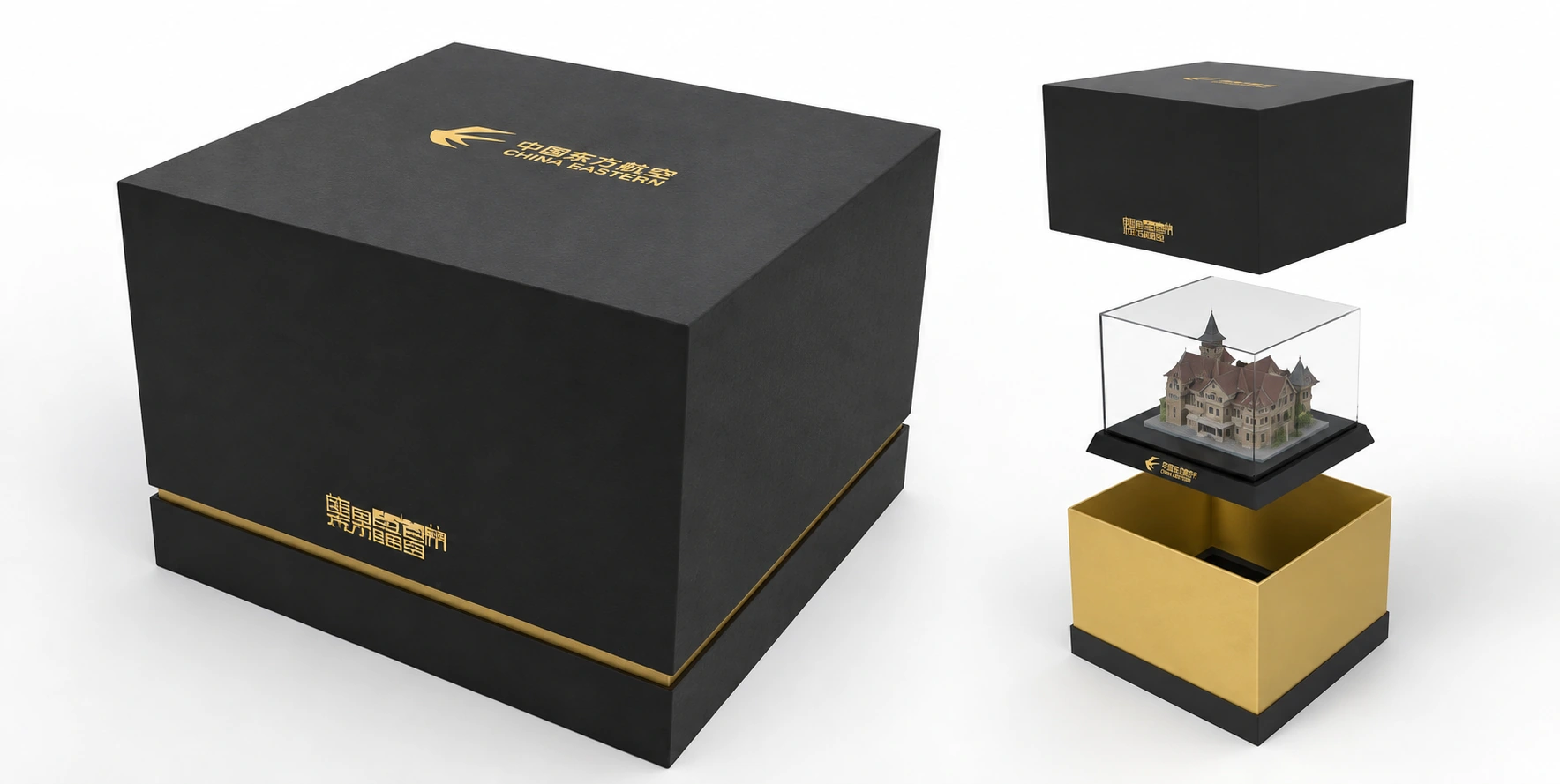
A presentation box and a shipping carton serve different purposes. The first contributes to the recipient experience; the second must protect the object during the agreed route. Fragile projections, tall forms and heavy bases need a packaging discussion before the design is locked.
Work backward from the date the trophy must be in your hands. Include time for design feedback, any sample, production, finishing, packing and transport. Ask for the delivery assumptions in writing. Do not treat a print completion date as an event-ready arrival date.
Turn the brief into a useful first conversation
You can start without a finished 3D file. A sketch, reference image and a few practical details are enough to explain the goal. For example: “We need a sculptural award for an indoor presentation, with an event crest, individual names and a fitted box.” Add your quantity, size range and deadline so the discussion can become specific.
Before comparing quotations, check that they include the same work. Design development, a sample, personalized lettering, finishing and packaging may be separate items. A lower print-only figure is not directly comparable with a finished and packed trophy.
Common questions
Can I commission a trophy without a 3D model?
Yes. Send a sketch or visual references and describe the size, quantity and occasion. Design development and 3D modeling can be scoped before manufacturing.
Does a gold-colored finish mean the trophy is solid metal?
No. A metallic appearance can be produced by a surface treatment on another material. Confirm the underlying material, coating and desired weight in the specification.